Syria's New Symbols: A Promising Start or a Return to Old Ways?
In the fragile yet hopeful process of rebuilding a nation, symbols carry immense weight. The recent unveiling of Syria's new visual identity and the plans to issue a new currency represent defining moments. Yet, while these new designs were presented as a symbol of unity, the transitional government has remained silent on a fundamental question: how was the decision actually made?
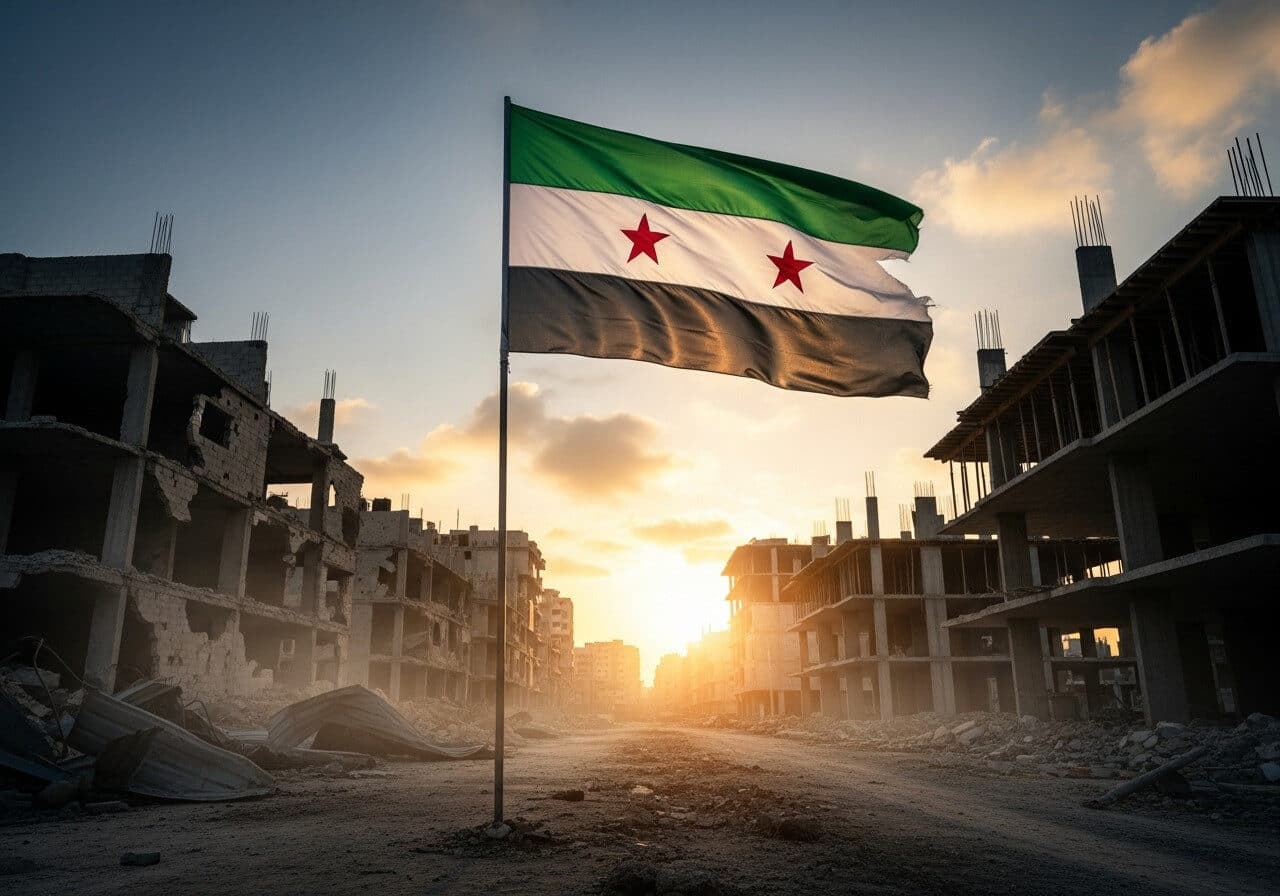
In the fragile yet hopeful process of rebuilding a nation, symbols carry immense weight. A new visual identity, a redesigned logo, or brand-new banknotes are not just administrative tasks; they are powerful statements about a nation's future, its values, and its relationship with its people. This is why the recent unveiling of Syria's new visual identity and the plans to issue a new currency represent defining moments: a symbolic break from a painful past and a visual commitment to a different future.
Yet, while these new designs were presented as a symbol of unity, the transitional government has remained dead silent on a fundamental question: how was the decision actually made? These vital projects are textbook examples of a worrying pattern of closed-door deals. We are focusing on this visual identity project not because its details are unique, but because of a striking irony: it is actually one of the government's most public-facing initiatives to date. The fact that such a high-profile project is shrouded in mystery speaks volumes about the lack of transparency in other, less visible state contracts. By all accounts, the contracts were awarded directly, without any public tender or open competition. No justification has been offered for this opaque approach, leaving Syrians and the international community to wonder: why was this path chosen?
It is important to emphasise that the goal here is not to judge the aesthetic quality of the visual identity itself. Instead, we must use it as a mirror reflecting a much larger, more dangerous issue: massive deals and projects being made far from the public eye. Excusing any mistake by saying "at least it's better than under Assad" is an insult to the sacrifices of the Syrian people. Comparing things to the Assad regime does not raise the bar; it drags it down to the absolute bottom. What Syrians deserve today is not just a "less bad" government, but one that is inspired by their aspirations and works with honour, respect, and dignity to serve them.
The agency behind the design stated that they did the work for free, calling it an honour to serve their country. While this patriotic gesture seems praiseworthy on the surface, it does not absolve the government of its duty to be transparent. Good governance is not just about saving money; it is about ensuring fairness, preventing backroom influence, and building public trust. A "free" project awarded in secret is less of a patriotic gesture and more of a political investment. It opens the door to "soft corruption," where direct bribes are replaced by future loyalties and favours. In politics, "gifts" are deferred debts, eventually paid back with public funds through exclusive contracts and preferential treatment. Why was this specific agency granted this honour, along with the massive political capital that comes with it, while countless talented Syrians were denied the chance to participate?
Ignoring global best practices carries immense risks. It immediately invites accusations of favouritism and corruption, even if no money changed hands, undermining the very legitimacy the government seeks to build. More dangerously, this secrecy does not look like a simple procedural failure; it feels like a deliberate strategy to push through fundamental changes to the state's identity away from any real public debate. Secrecy is the perfect cover for imposing a new reality that Syrians might not accept if presented with it openly. Many have already noticed that the flag of the revolution and independence is gradually fading from the official scene, whether in military parades, ministry logos, or international forums. This fuels a troubling suspicion that this new visual identity is just a stepping stone toward replacing the flag that stood as the sole unifying symbol of a collective Syrian identity against both the Assad regime and extremist factions.
The government has missed a historic opportunity to heal the wounds of a fractured nation. The design process itself was completely obscure. Instead of a genuine, well-thought-out public consultation, public engagement was reduced to a simple survey posted on social media. Such a survey lacks the most basic standards of statistical validity. How could a tool like this possibly represent the diverse views of the Syrian people, including the millions in refugee camps, areas with limited internet access, and communities that do not use social media at all?
Building a national identity demands deep community dialogues, workshops with experts, and town halls with Syrians at home and in the diaspora, not a superficial digital tool that falls short of the task and yields scientifically invalid results. To make matters worse, the results of this survey were never published, leaving Syrians to wonder what their fellow citizens actually said, and how this symbolic gesture influenced the final designs, if indeed it did at all.
The transitional government now faces a critical choice. To ignore the questions surrounding its decisions means building the new Syria on the old foundations of secrecy and exclusion. The constructive path, however, lies in communication and inclusion.
To begin rebuilding public trust, the government must first offer a complete and transparent justification for its decision to award these contracts directly. If there were compelling reasons, they must be explained to the public. Second, and most importantly, the government must commit to open, competitive processes for all future projects. This step alone would send a powerful signal that this new era of governance will be truly different.
Adopting best practices now is not a sign of weakness; it is a sign of strength. It would show that the government listens to its people and is genuinely committed to building a state that serves all its citizens. Syria's new symbols have been revealed, but nations are not built on symbols alone: they are built on the trust that gives those symbols meaning. Transparency and public participation are not optional extras of good governance; they are the only foundation upon which the Syria its people deserve can actually be built.
Further reading
- The Fiscal Calculus of Syria’s Post-Assad Reconstruction
Same new-currency banknote project: this article attacks how the Decree 293 contract was awarded, the fiscal piece weighs what that liquidity should buy instead.
- Washing the Stairs from the Top Down: Is it Enough?
Shared anti-corruption argument: no-tender soft corruption is exactly the systemic problem that top-down political will alone cannot fix without institutions and participation.
- Syria's Vision for the Future vs. a Shadowy Reality
Both expose the gap between the transitional government's transparency rhetoric and opaque, deal-driven economic decisions.
Related posts
Finding Our Place in the New Syria and the Fear of Losing the Victim Identity
At last, the Assad regime has fallen after a long and painful era. While this historic event carries profound hope for a new Syria, it also stirs complex and difficult emotions for many of us. What many of us are experiencing is the fear of losing the victim role.
The Ecstasy is Over, Reality Kicks In, Rebuilding Syria Starts With You
The Ecstasy is Over, Reality Kicks In: Rebuilding Syria Starts With You Three weeks have passed since the fall of the Assad regime. This was a moment of great triumph and relief for many. But as the celebrations end, we must face a clear truth: the hard work of rebuilding our homeland begins now. And
Ensuring Social Services in Syrian Public Sector Reform Post-Assad
The Assad state carried “ghost employees” for decades, and dismantling that payroll is a genuine and urgent reform. It is also a decision about who eats next month, taken by a government with little fiscal room and no reliable count of the people it is about to release. This argues for sequencing the social safety net ahead of the layoffs, and treats the missing data as the central problem rather than a footnote.