Comparative suffering in Syria
Brené Brown calls the habit of ranking pain comparative suffering: the belief that empathy is scarce and must be rationed. In Syria that private habit has scaled into a public mechanism, a hierarchy of suffering in which communities compete for aid, attention and recognition. Dismantling it is a precondition for healing and reconciliation.
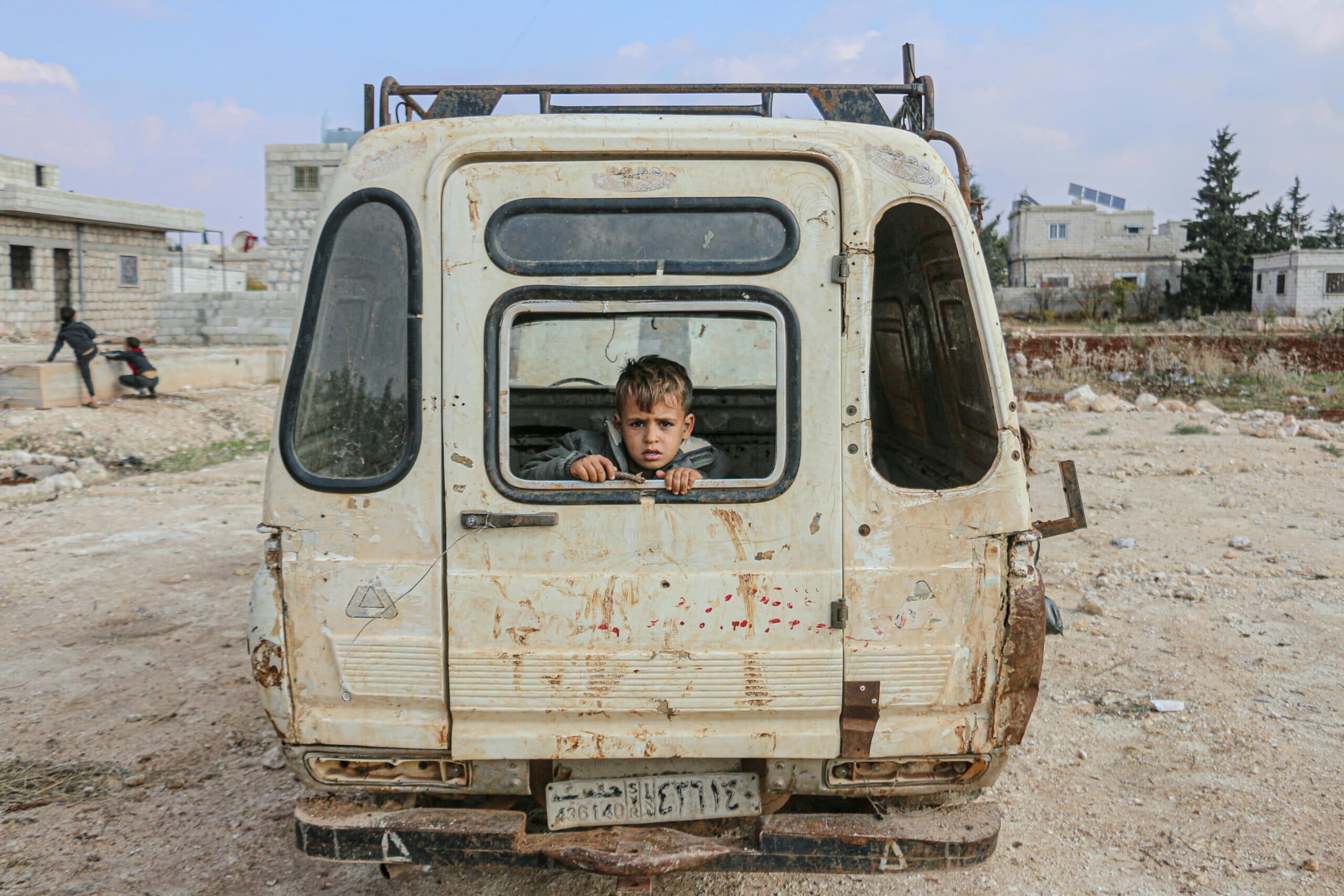
Hardship and pain are unavoidable. When we face our own suffering, or watch someone else’s, we can easily slip into what the sociologist Brené Brown calls “comparative suffering”: the tendency to rank pain. We decide our suffering counts for more, or for less, than someone else’s. We downplay our own pain because “someone else has it worse”, or we inflate it to justify our feelings and claim special treatment. Brown’s point is that the ranking is corrosive. It grows out of fear and scarcity, the false belief that empathy is a limited resource that must be rationed, and it costs us twice: we stop acknowledging our own feelings honestly, and we stop extending genuine empathy to anyone else. When we ignore our feelings or sit in judgment on someone else’s pain, connection and kindness are what get lost. Brown describes a private habit. Syria shows what happens when the habit scales.
One war, many kinds of loss
The conflict in Syria, and the years of Assad rule behind it, offers a tragic demonstration of comparative suffering operating at the scale of a nation, compounding the damage in a society already traumatised. The war made suffering universal. It did not make it uniform.
There were those who endured torture and imprisonment, and those who lost loved ones to bombings, chemical attacks or extrajudicial killings. Millions fled their homes, displaced within the country or scattered as refugees, losing livelihoods, communities and any sense of security. Particular groups, such as the Kurds, faced targeted persecution and discrimination. Those who stayed and were never directly in the line of fire still lived under constant fear, economic hardship and the loss of basic rights. And an entire generation of children has grown up knowing only conflict, carrying trauma, missed schooling and, for some, forced conscription.
The hierarchy of suffering
Out of that variety something predictable and poisonous forms: a hierarchy of suffering, in which some groups’ experiences are treated as more valid, more deserving, than others’. The hierarchy is not an accident of grief. It is a competition. Where aid, international attention and political power are scarce, each group comes under pressure to prove that its suffering is the most important, and proving your own pain usually means minimising someone else’s.
Social media amplifies the contest. The platforms reward whoever magnifies their own suffering most effectively, and magnifying yours in a crowded feed almost always means dismissing someone else’s. Groups who feel their suffering is underrepresented can go further still, reaching for the ranking as a justification for renewed violence.
What ranking pain costs
The costs are not abstract. A person whose suffering is minimised or ignored is re-traumatised by the dismissal itself, and their sense of injustice deepens. Between groups, the ranking breeds division and distrust, which is precisely the ground on which peacebuilding and reconciliation fail. Nor can individuals recover while the hierarchy stands: nobody heals from a trauma they must constantly defend and justify. And at the far end of the chain, unresolved grievances and the competition for recognition feed back into instability and further violence. The hierarchy of suffering does not merely record the war’s damage. It extends it.
Empathy is not a scarce resource
The way out is not to pretend that every experience of the war was the same. The claim is different: pain does not need a ranking to be real. Everyone the conflict touched deserves recognition and support, whatever form their loss took. That is Brown’s insight about validating our own feelings while acknowledging the validity of others’ pain, applied at the scale of a country.
In practice, that means spaces where Syrians from different communities can tell their stories and be heard without judgment, which is empathy practised without comparison, and which does more to dissolve stereotype than any official campaign. It means holding the real differences in experience honestly while insisting on the common threads of loss, trauma and resilience that run through almost every Syrian life. It means aid, rehabilitation and justice mechanisms that are trauma-informed, built by people who understand that the conflict’s psychological damage is measured in decades, not news cycles. It means using social media in ways that foster understanding rather than competition. And it means distributing aid fairly, and visibly fairly, because the perception that one group is favoured is exactly the fuel the hierarchy runs on.
Brown’s argument was written for individuals. Syria has turned it into a national requirement: healing, reconciliation and any just future depend on dismantling the ranking of pain and replacing it with the harder discipline of validating everyone’s, and that is work no donor conference or foreign resolution can do on Syrians’ behalf. A hierarchy of suffering offers exactly one prize to the group that reaches its top: the title of having suffered most. Syrians have paid far too much, for far too long, to spend what remains competing for that.
Further reading
- Finding Our Place in the New Syria and the Fear of Losing the Victim Identity
Same psychological terrain of post-Assad reconciliation: validating suffering versus clinging to victim identity. Direct companion on trauma and identity in healing.
- Acute polarisation in Syria
Comparative suffering is a form of the divisive binary ranking the target dissects; both argue reconciliation requires rejecting zero-sum framing of fellow Syrians.
- From Militia Mindset to Mature Governance in Syria
Selective, eye-for-an-eye justice that spares the powerful is the institutional analogue of comparative suffering; both call for trauma-informed, even-handed recognition over hierarchy of grievance.
Related posts
Ensuring Social Services in Syrian Public Sector Reform Post-Assad
The Assad state carried “ghost employees” for decades, and dismantling that payroll is a genuine and urgent reform. It is also a decision about who eats next month, taken by a government with little fiscal room and no reliable count of the people it is about to release. This argues for sequencing the social safety net ahead of the layoffs, and treats the missing data as the central problem rather than a footnote.
The Ecstasy is Over, Reality Kicks In, Rebuilding Syria Starts With You
The Ecstasy is Over, Reality Kicks In: Rebuilding Syria Starts With You Three weeks have passed since the fall of the Assad regime. This was a moment of great triumph and relief for many. But as the celebrations end, we must face a clear truth: the hard work of rebuilding our homeland begins now. And
Syria's New Symbols: A Promising Start or a Return to Old Ways?
In the fragile yet hopeful process of rebuilding a nation, symbols carry immense weight. The recent unveiling of Syria's new visual identity and the plans to issue a new currency represent defining moments. Yet, while these new designs were presented as a symbol of unity, the transitional government has remained silent on a fundamental question: how was the decision actually made?